
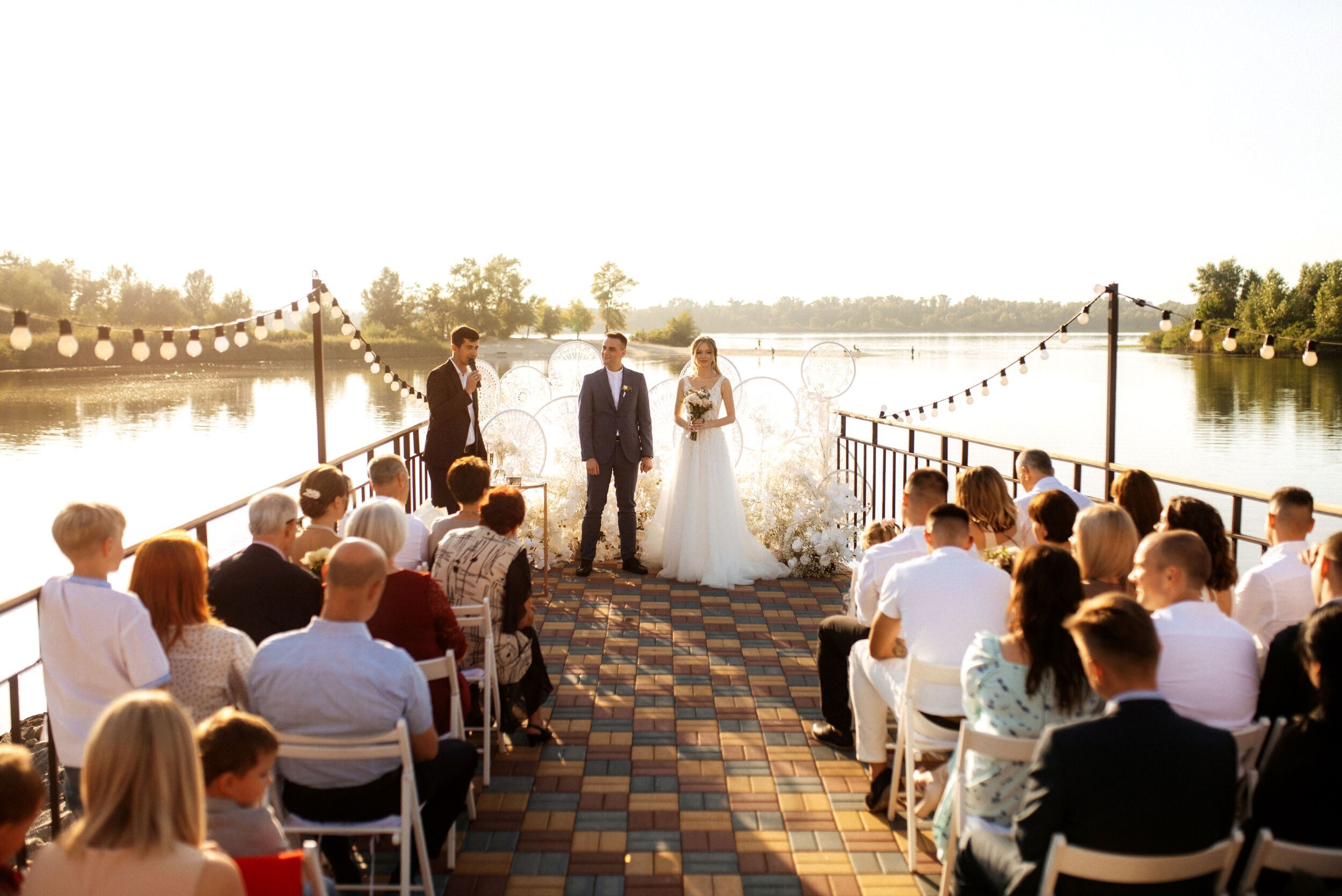
Choosing the right wedding venue can significantly impact the overall experience for you and your guests on your big day. With so many options available, from elegant ballrooms to rustic barns and everything in between, finding the perfect venue can be overwhelming. To help you navigate this important decision, here are ten tips for finding the perfect wedding venue.
1. Start Your Search Early
Venues can book up quickly, especially during peak wedding seasons. Start your search as early as possible to increase your chances of securing your preferred date. Ideally, begin looking at least a year in advance. Online directories, web searches and word-of-mouth recommendations can be helpful in the search. Early planning gives you more options and time to visit multiple venues before making a decision.
Pro tip: Start your venue search and tours prior to choosing your wedding date. While it’s helpful to have a list of dates that will not work for your big day, your desired venue’s availability may help your finalize your actual wedding date.
2. Define Your Wedding Style
Before visiting venues, have a clear idea of the style and theme of your wedding. Are you envisioning a romantic garden wedding, a glamorous ballroom affair, or a laid-back beach celebration? Knowing your wedding style will help you narrow down the list of potential venues that align with your vision. Look for venues that complement your desired aesthetic, and tour those locations first.
3. Set a Realistic Budget
Determine how much of your overall wedding budget you are willing to spend on the venue. During your research and venue tours, be intentional about learning what is included in the price and what may come as an additional cost. Remember to leave room in your budget for hidden fees, such as service charges, overtime fees, or security deposits.
4. Consider the Guest List Size
Your venue should comfortably accommodate your guest list without feeling too cramped or too empty. Start by having a rough estimate of the number of guests you plan to invite. This will help you find a venue with the right capacity. Some venues have minimum guest requirements, so ensure that your guest count aligns with their policies.
5. Think About the Location
The location of your wedding venue is key to ensuring a smooth and enjoyable experience for both you and your guests. Consider the convenience of the venue’s location, especially for out-of-town guests. Is it easily accessible by car or public transportation? Are there nearby accommodations for guests who may need to stay overnight? Also, think about the travel time between the ceremony and reception venues if they are in different locations.
6. Check for Availability
Once you have a shortlist of potential venues, check their availability for your preferred wedding date. Some venues may offer discounted rates for off-peak days or seasons, which can be a great way to save money. If you have flexibility with your date, it can open up more options and potentially lower costs.
7. Visit Multiple Venues
Seeing venues in person is essential. Photos and descriptions can only tell you so much. Schedule visits to your top choices to get a feel for the space. Pay attention to the ambiance, lighting, and overall vibe of each venue. Take note of details like the condition of the restrooms, the state of the landscaping, and the quality of the furniture. These small details can make a big difference in the overall experience.
8. Ask About Inclusions and Restrictions
Each venue has its own set of rules and restrictions. Some venues provide all-inclusive packages that cover catering, decorations, and coordination, while others may only offer the space. Ask about what is included in the rental fee and if there are any restrictions, such as noise curfews, decoration limits, or preferred vendor lists. Knowing these details upfront will help you plan accordingly and avoid any unexpected surprises.
Pro tip: During your venue tours, don’t forget to ask all the important questions: 28 Important Questions to Ask Wedding Venues
9. Consider the Weather and Season
If you’re planning an outdoor wedding, think about the weather conditions for the time of year you’re getting married. Make sure the venue has a backup plan in case of rain or other inclement weather. Tents, indoor spaces, or covered areas are essential for outdoor venues. For indoor venues, consider how the space will accommodate heating or air conditioning needs, depending on the season.
10. Trust Your Instincts
After visiting several venues and weighing all the practical considerations, trust your gut feeling. Choose a venue that feels right to you as a couple. Imagine yourself getting married there, celebrating with your family and friends, and seeing if it aligns with your vision. If a venue fits within your budget, offers your preferred date and feels like the perfect backdrop for your big day, book it!
Finding the perfect wedding venue involves careful consideration of various factors but with thoughtful planning, you’ll find the perfect place to say "I do."